
01THE CHALLENGE
Reconnecting to residential gardening
By 2025 Piper wanted to get back to her roots: neighborhood gardens. She’d spent years teaching home gardeners. The workshops had a following. They didn’t have a home. That’s why she came to me, and together we built a new story.

The brand came first. The Grower’s Life came into being. It got a new logo and a new identity, down to a botanical mark. The logo reads “by Urban Dirt Co.,” so ten years of reputation came along instead of being left behind.
“Tickets, check-in, reminders, follow-up — it’s all in one place now. I get to spend the night with my guests instead of my spreadsheets.”
02WHAT I BUILT
A backend that connects Piper’s passion, growing food, to clients who are starving for growing information.
All of this work needed one home. I built thegrowerslife.com as the hub for everything Piper offers: home gardens, consultations, workshops, and events. Corporate work links out to Urban Dirt Co.
-
01 — BOOK THE NIGHT
Pick a date, and The Grower’s Life sets it up.
The venue names the night, the start time, and how many people the room holds. The Grower’s Life puts the event in the system the same day — venue, time, headcount, ticket price. It goes on Piper’s calendar and on the venue’s page.
Nothing for the venue to build. No software to log into.
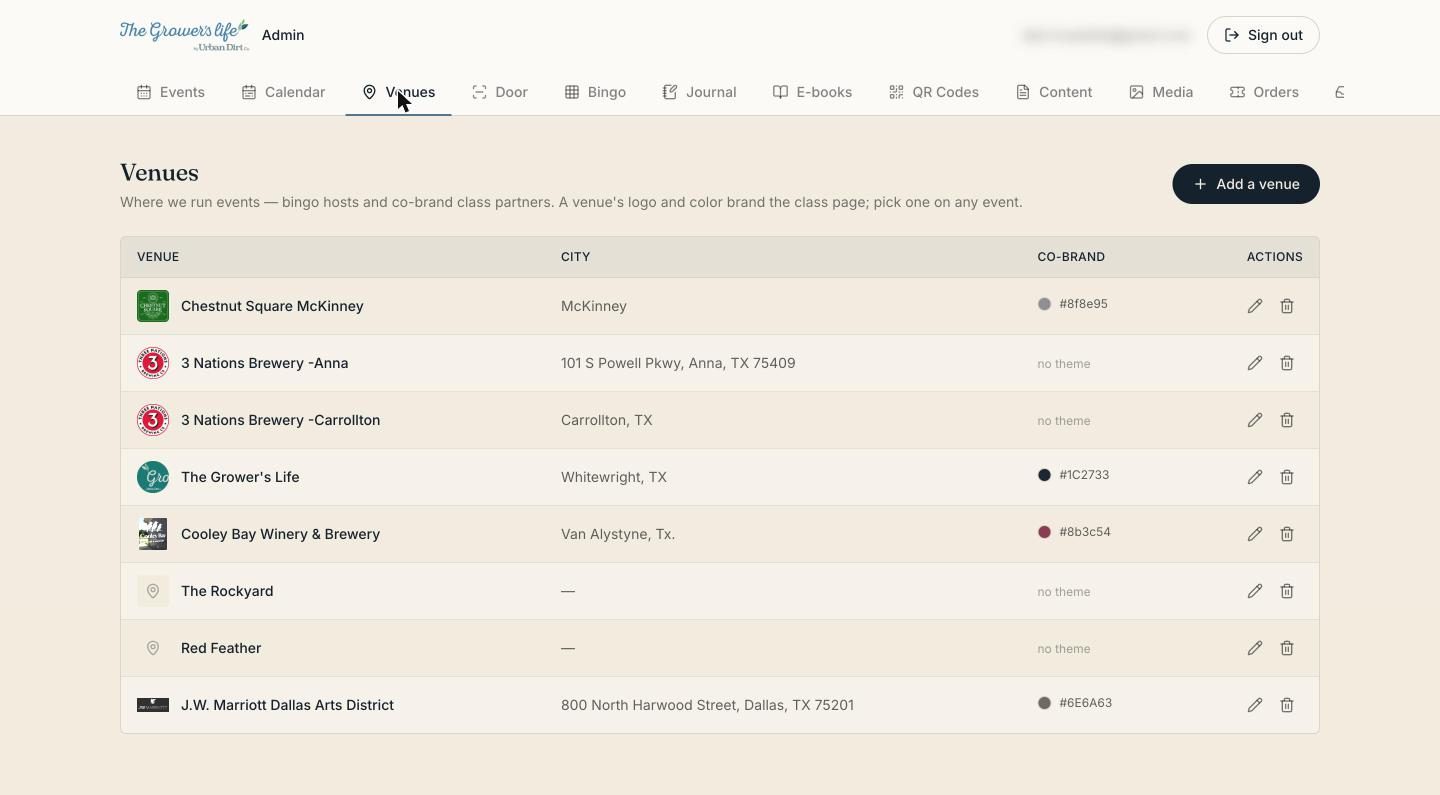
Every venue Piper works with lives here, with its logo and color. That’s what brands its page. -
02 — CO-BRANDED PAGE
The venue’s brand up front. Piper’s never gets lost.
The venue’s logo, its colors, its upcoming nights. One link it can put in an email, a post, or a QR code on the bar. Guests see the venue’s name first, then The Grower’s Life.
Here’s the one Piper runs for the JW Marriott Dallas Arts District.
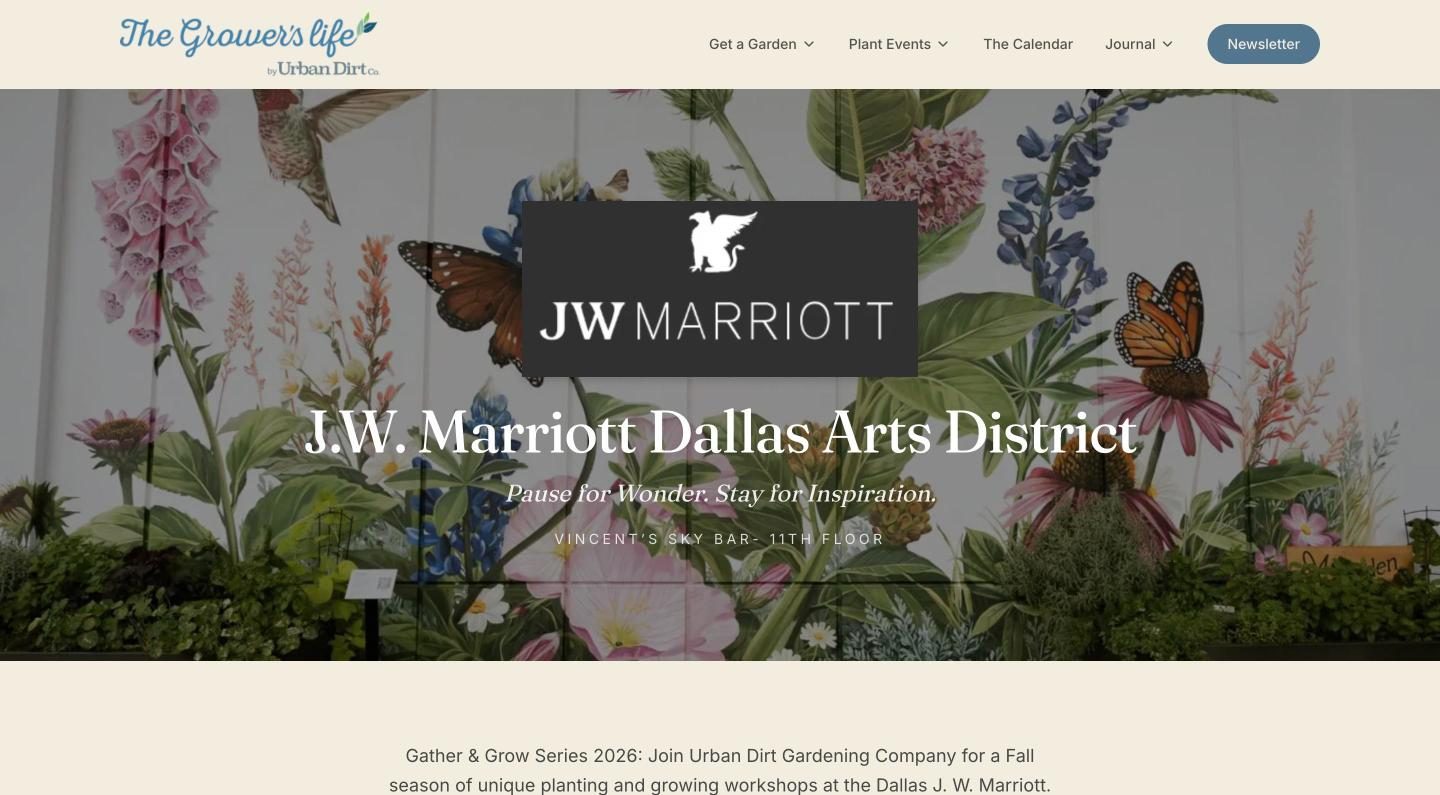
The venue’s page. Their logo, their tagline, their photo. 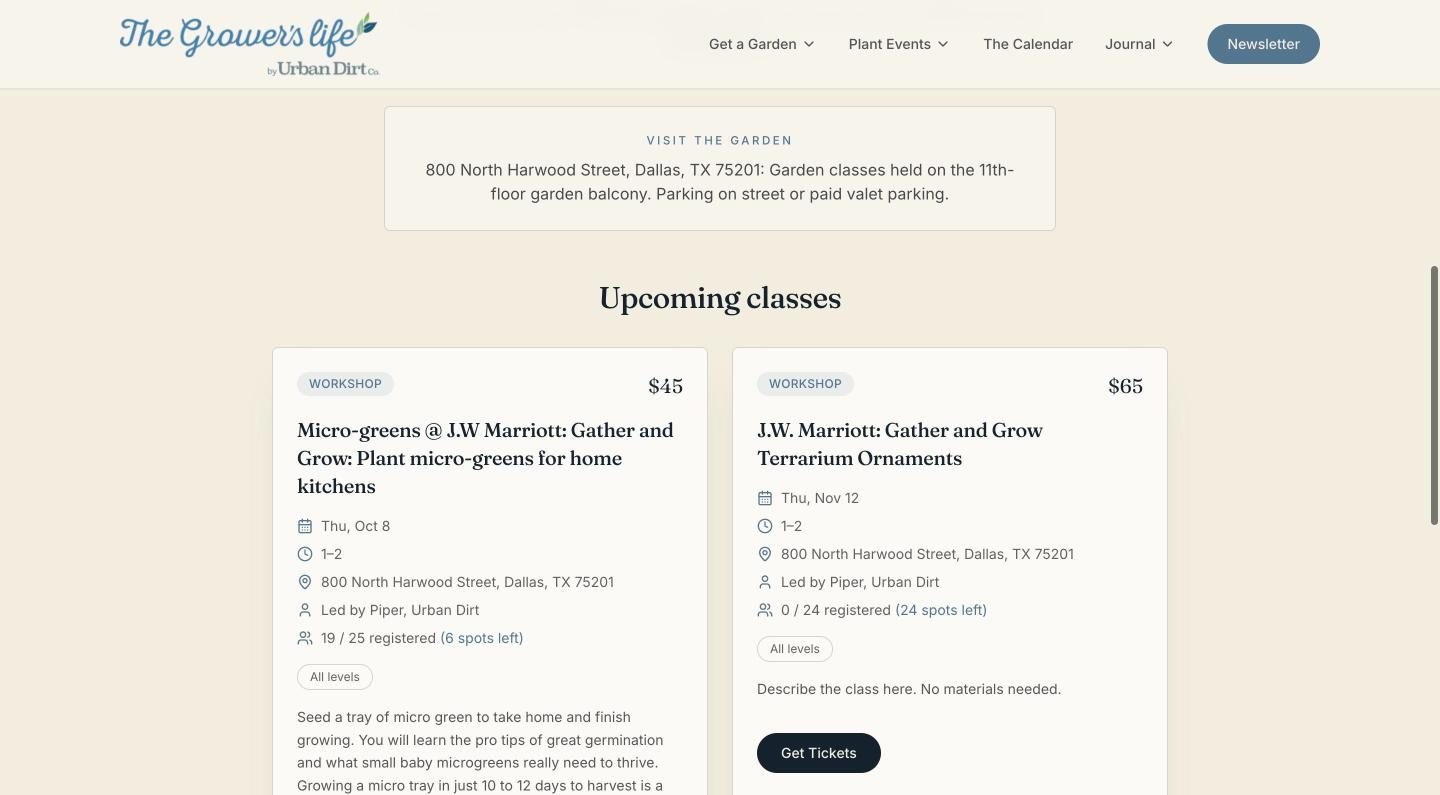
Upcoming nights sit right under it, with live seat counts. Sold out shows as sold out. -
03 — TICKETS
Tickets are sold on the venue’s co-branded page.
Checkout runs on Square — the same processor most small businesses use for the register. The Grower’s Life never sees or stores a card number. Square handles all of it.
The guest gets a ticket in their inbox with a QR code, and a reminder before the night.
The Grower’s Life takes care of the ticketing. The venue doesn’t touch it.
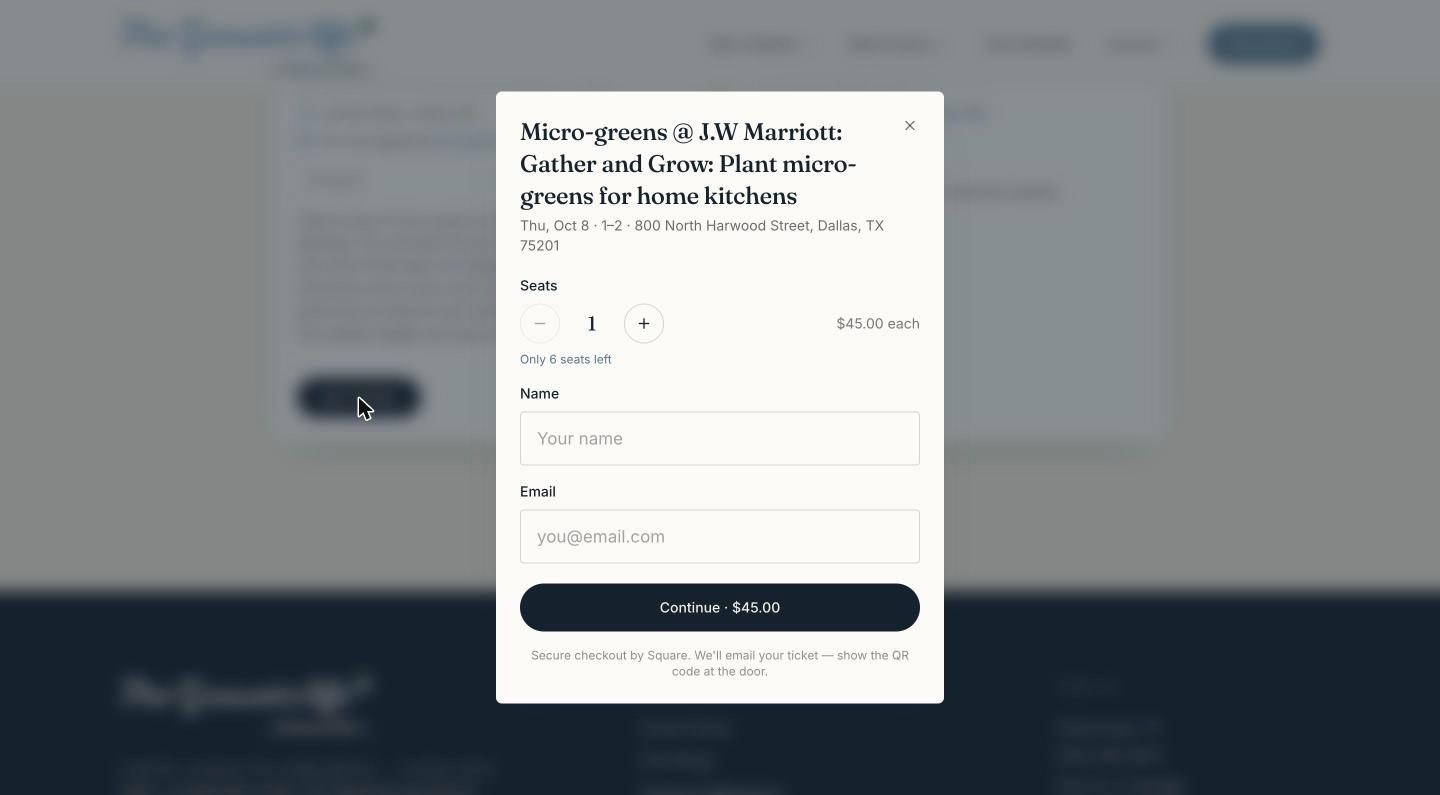
Seats, name, email. One click and Square takes over. Seats left updates as people buy. 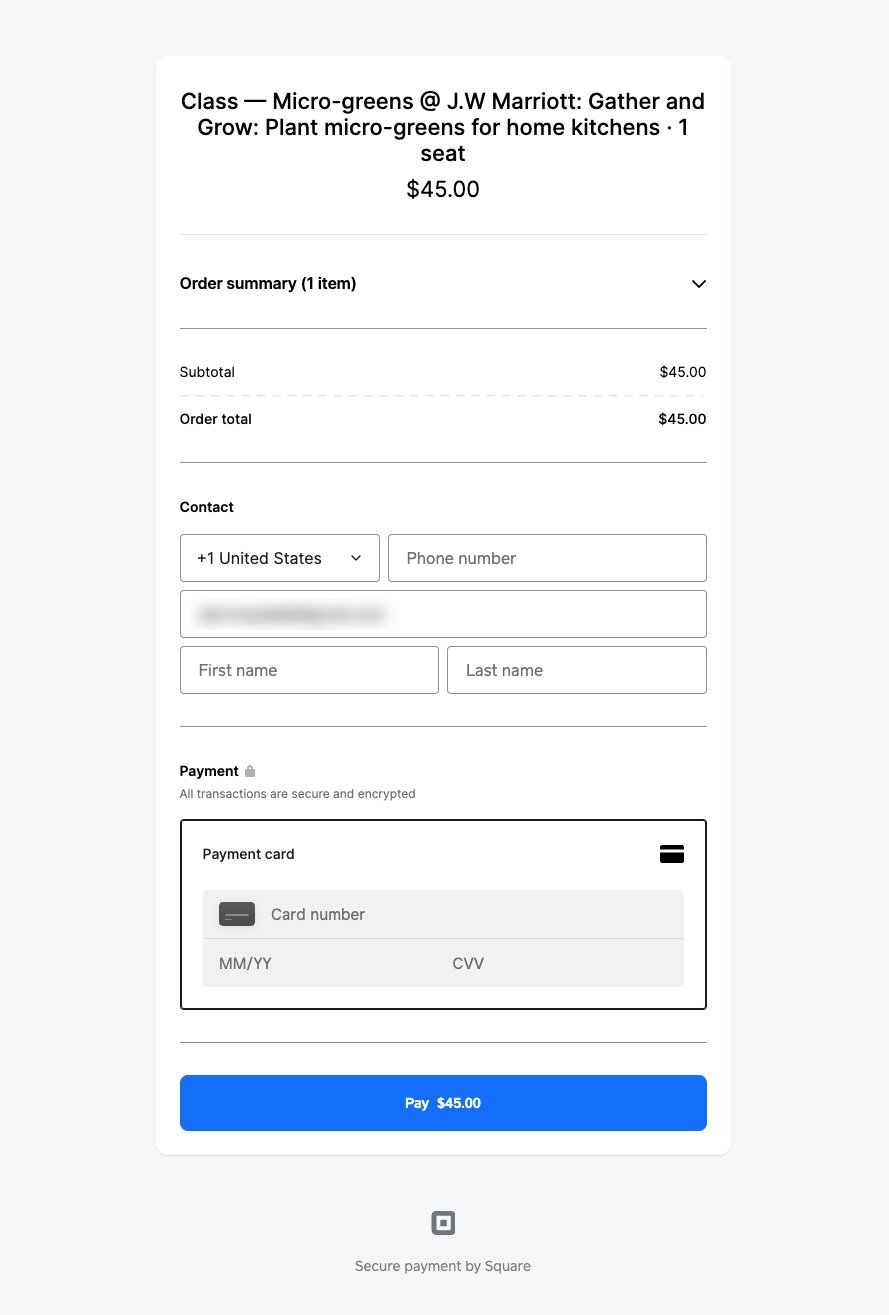
Square’s own page. The card goes straight to Square; The Grower’s Life never touches it. 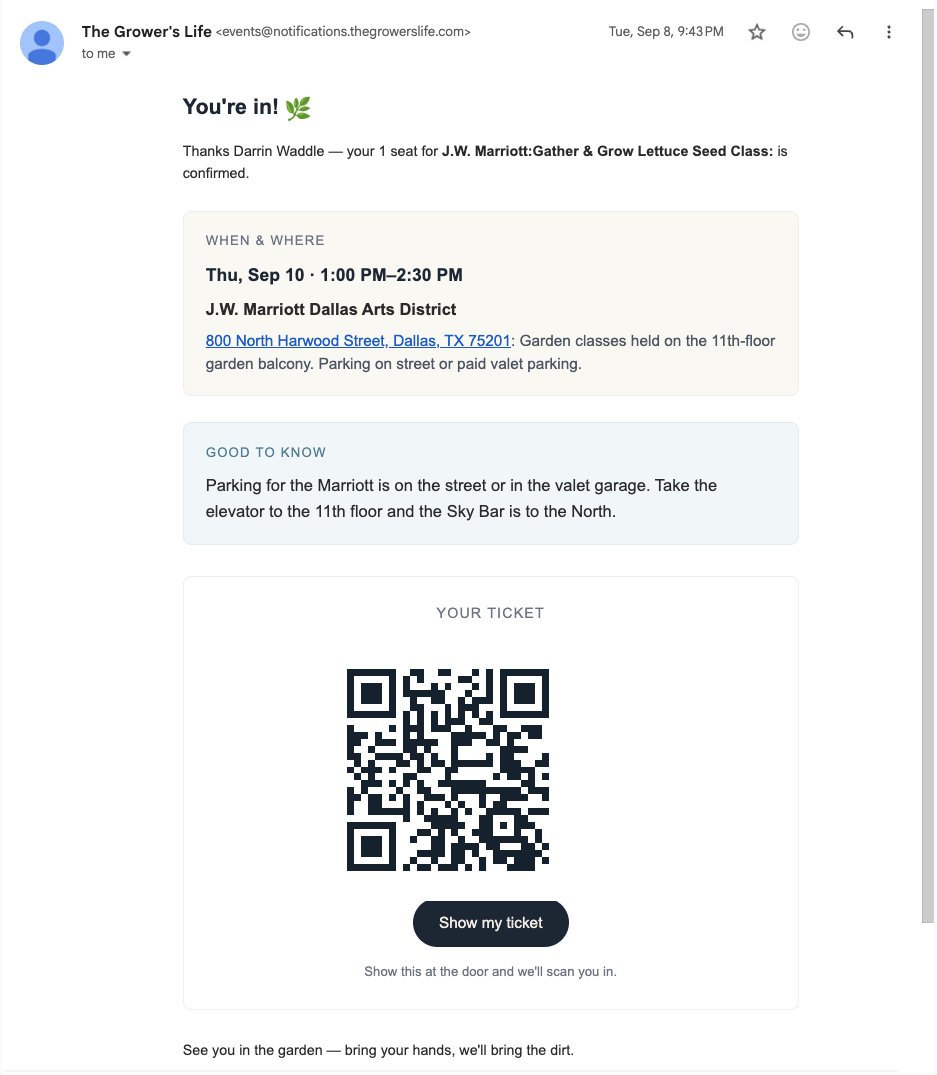
What lands in their inbox. Where, when, parking, and the QR that gets scanned at the door. -
04 — FILLING THE ROOM
Both sides promote it.
The Grower’s Life promotes the night on its social media, the venue promotes it on theirs, and the room fills with happy bingo players.
-
05 — THE DOOR
The Grower’s Life works the door.
A Grower’s Life host stands at the door with a phone. Scan the QR on the guest’s screen or type their name. Checked in. Takes about three seconds.
The host can see who’s in, who’s still coming, and how many seats are open — so they know when to sell to walk-ups and when to stop.
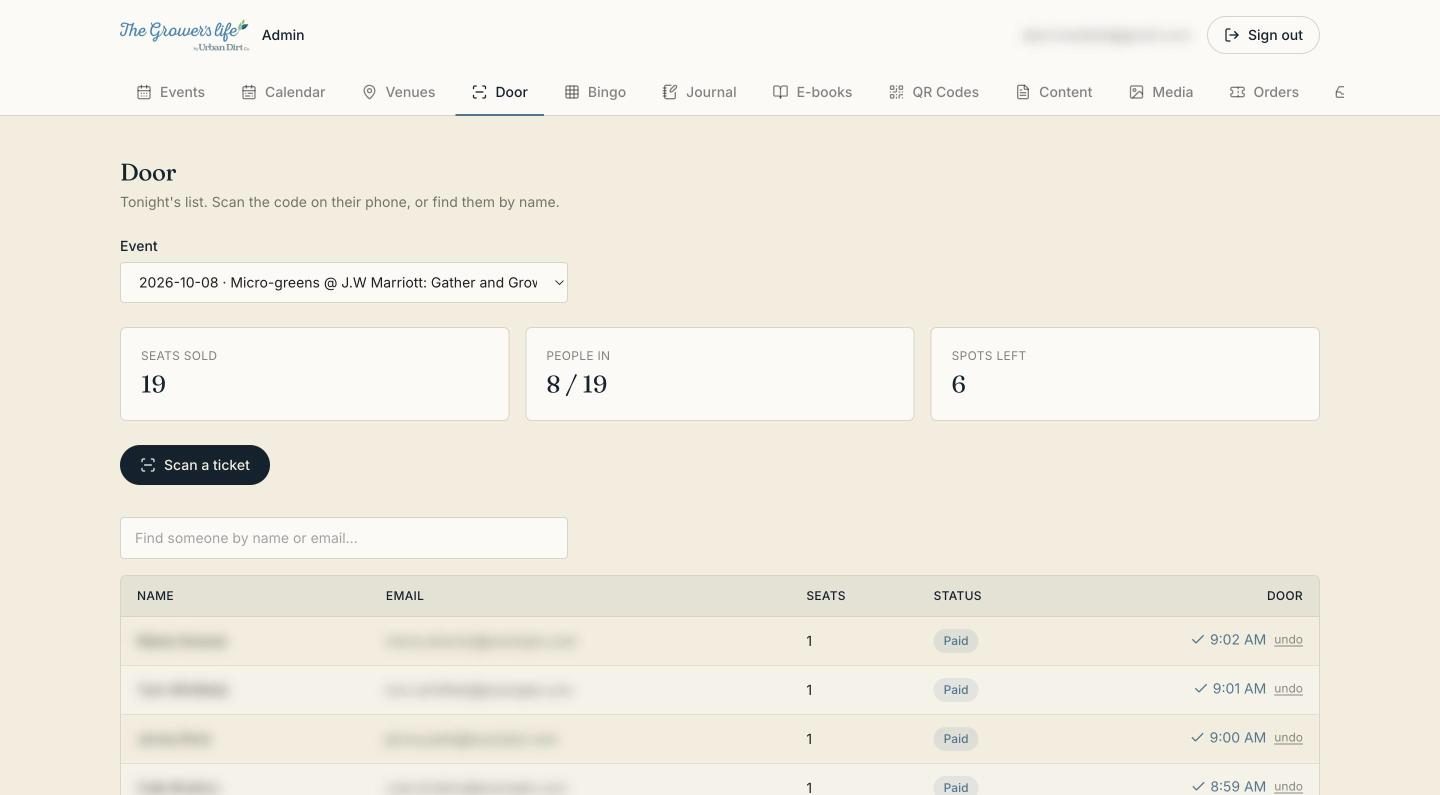
Tonight’s list. Seats sold, people in, spots left. Names blurred here — they’re real on the night. 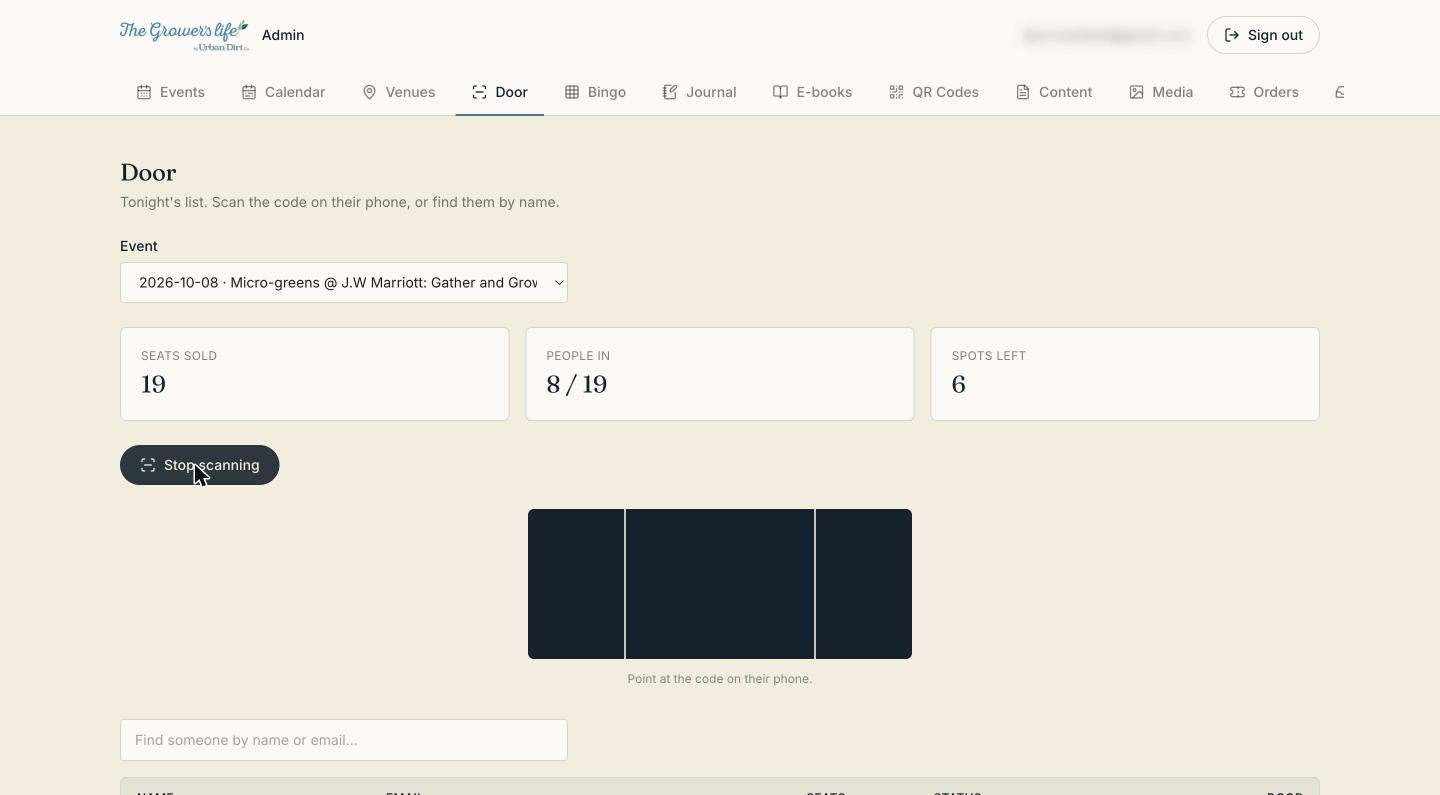
Scanner open. Point it at their phone. 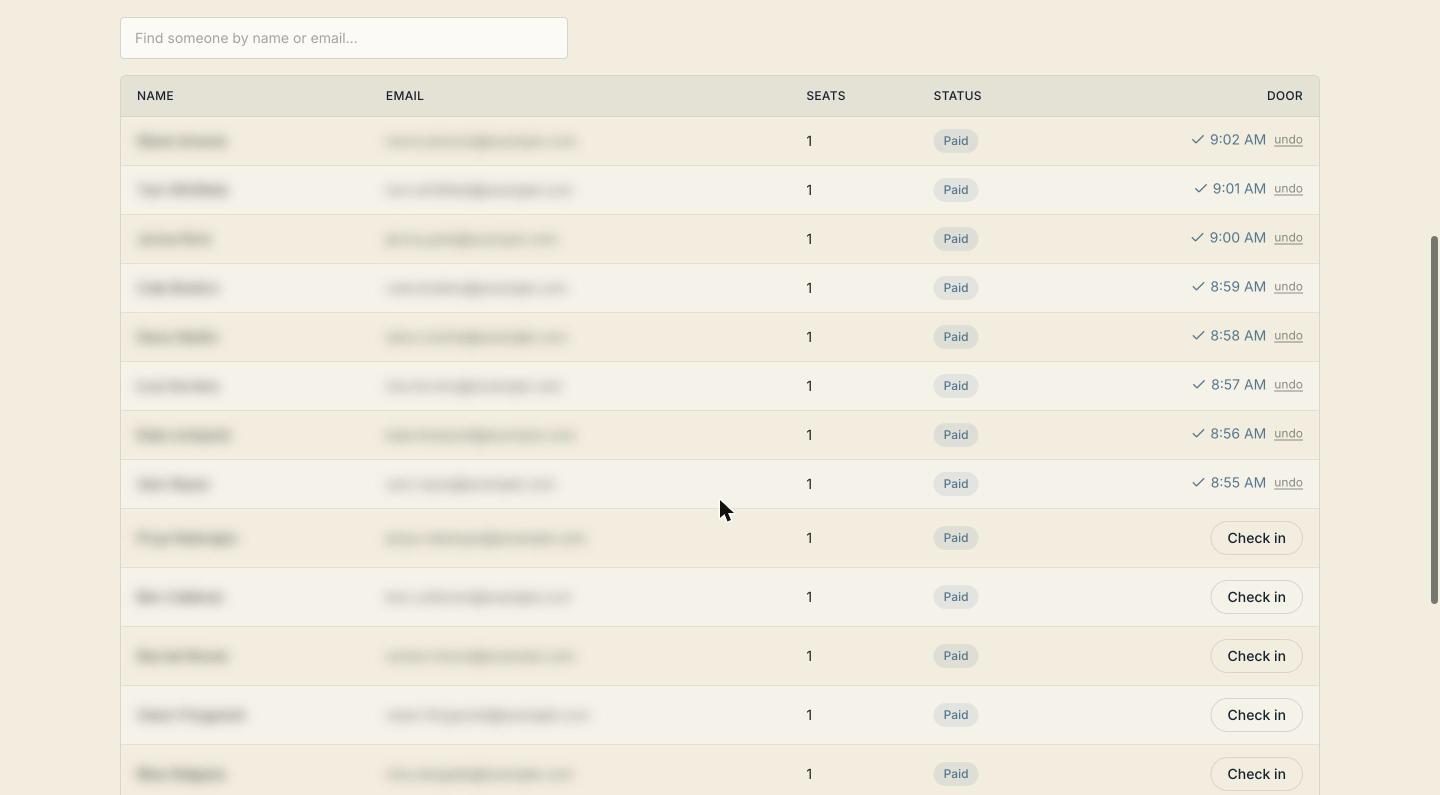
Each guest gets a time stamp when they walk in. Missed a scan? Find them by name and tap.

WHAT GOES OUT
A few of the social media posts.
This is the kind of thing that goes out ahead of a night. Venues get versions with their name on them, sized for each platform.